Kit Guidelines
What am I expected to wear at events?
Time Period
The Iceborn Vikings are late Viking Age, so around 900-1066AD. The Viking age is considered to be around 793AD-1066AD, or the raid on Lindisfarne to the Battle of Hastings.
Clothing
See below for detailed men's/women's outfits (terms used for differentiating between these two generic costumes, in practice anyone can wear either costume. We generally encourage anyone enaging in combat to wear the "male" costume for safety reasons (not tripping up on long skirts). Clothing was generally wool or linen.
We reenact a common viking encampment so we tend to aim for as much accuracy as possible so there are different ranks (as there would be back then.)
Thrall (Unfree Viking)
Viking thralls (enslaved people) would have worn clothing in muted, natural, and undyed colours, reflecting their low status and lack of resources for expensive dyes. Their garments, usually made of rough wool or linen, would have been in colors that required little to no processing.
We are probably one of the few groups that don't have thralls,
Karl (Common Viking)
A Common Viking (farmer, laborer, or artisan) in the Viking Age (c. 793–1066 AD) would typically wear clothes in muted, natural, and earthy tones derived from locally available plant dyes and the natural colors of wool. While popular culture often depicts them in drab greys, they likely wore a variety of colors, though they would be less intense, darker, or more muted than those worn by the wealthy.
Everyone in the group will generally be a Karl
Huscarl
A Viking housecarl, as an elite, professional warrior in the service of a king or chieftain, would wear clothing that signaled high status, wealth, and functional, vibrant color. Their attire was not the drab grey and brown often depicted in media, but featured rich, dyed, and often imported fabrics.
We tend to stick to two Huscarls within the group
Jarl
A Viking jarl (noble or chieftain) would wear clothing designed to showcase wealth, status, and power, featuring vibrant, saturated colors that required expensive, imported dyes. Unlike the common, muted, or natural-toned clothes of farmers, a jarl's garments—often made of fine wool or silk—would feature bold colors such as deep blue, scarlet red, yellow, and occasionally purple
In Iceborn Vikings we only have one Jarl (The Lea
Modern kit - Mobile phones / wallets / medical devices
Where possible please keep modern kit hidden at events. If you have a modern aid - walking stick, glasses, supportive clothing please make one of the council aware and we can work with you to find a solution which "hides" it as best as possible, or encorporates it into your costume somehow. Glasses are ok excluding in combat because of the risk of lenses shattering in the proximity of your eyes risk. That said, for general (low risk) training sessions, many of us do wear glasses.
If you do wish to wear a gumshield during combat (totally optional) please consider opting for a clear version.
Men's costume or Combat Costume
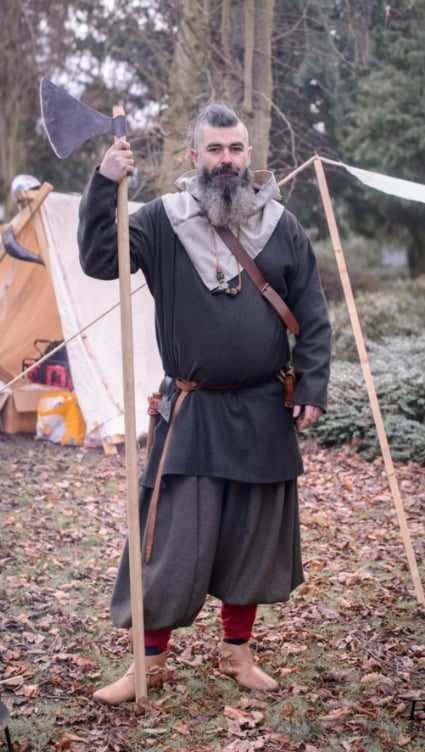
The men's costume typically consists of:
- Tunic
- Undertunic
- Trousers
- Leg wraps
- Nalbinding socks
- Leather shoes or boots
Women's costume
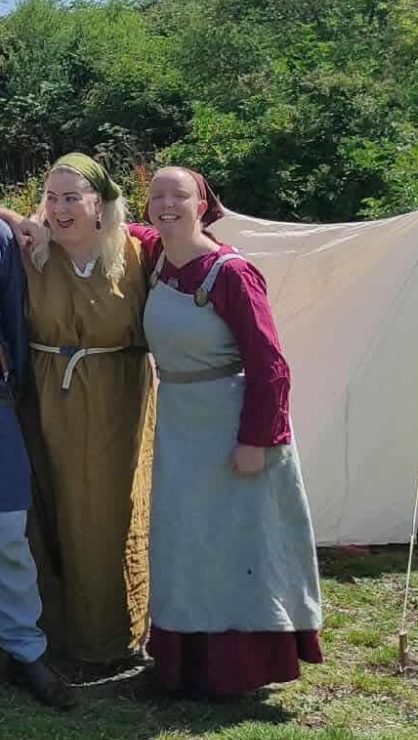
The women's costume typically consists of:
- Dress
- Underdress
- Apron dress
- Leg wraps
- Leather shoes or boots